
↓
 

Denton Civil Engineering

...a Pro17 Engineering marketing website.

Denton Civil Engineering
(940) 220-4727
Denton Civil Engineering
  • Home
  • Civil Engineering
  • Construction Management
  • Drone LiDAR Mapping
  • Environmental Engineering
  • Expert Witness
  • Land Development Services
  • Land Surveying Services
  • Structural Engineering
  • Transportation Engineering
  • Blog
Home - Page 2 << 1 2 3 4 … 7 8 >>

Post navigation

← Older posts
Newer posts →

Centrifugal pump selection and characteristics

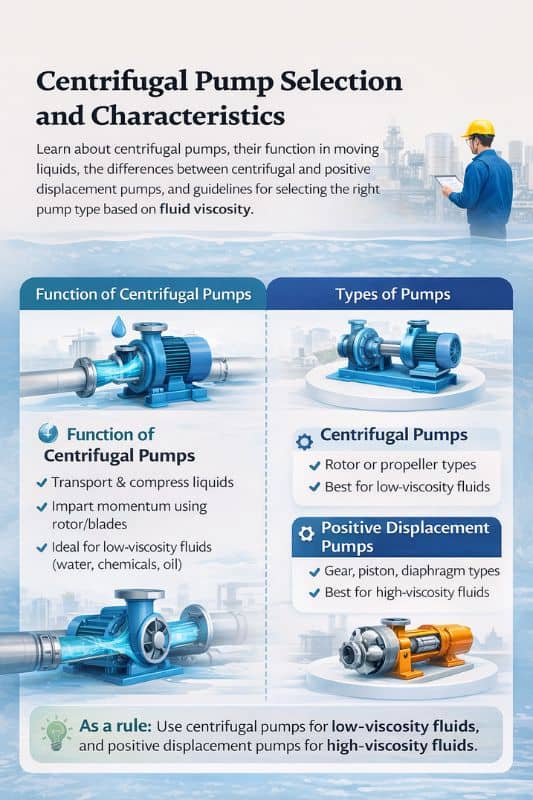
 Infographic explaining centrifugal pump selection and characteristics including function, types, and comparison with positive displacement pumps

The basic function of a pump is to do work on a liquid. It can be used to transport and compress a liquid. In industries heavy-duty pumps are used to move water, chemicals, slurry, food, oil and so on. Depending on their action, pumps are classified into two types – Centrifugal pumps and positive displacement pumps. While centrifugal pumps impart momentum to the fluid by motion of blades, positive displacement pumps transfer fluid by variation in the size of the pump’s chamber.

Centrifugal pumps can be of rotor or propeller types, whereas positive displacement pumps may be gear-based, piston-based, diaphragm-based, etc. As a general rule, centrifugal pumps are used with low-viscosity fluids and positive displacement pumps are used with high viscosity fluids. (Wikipedia)
Posted on April 3, 2026 by DentonCEApril 3, 2026

Internal Soil Erosion

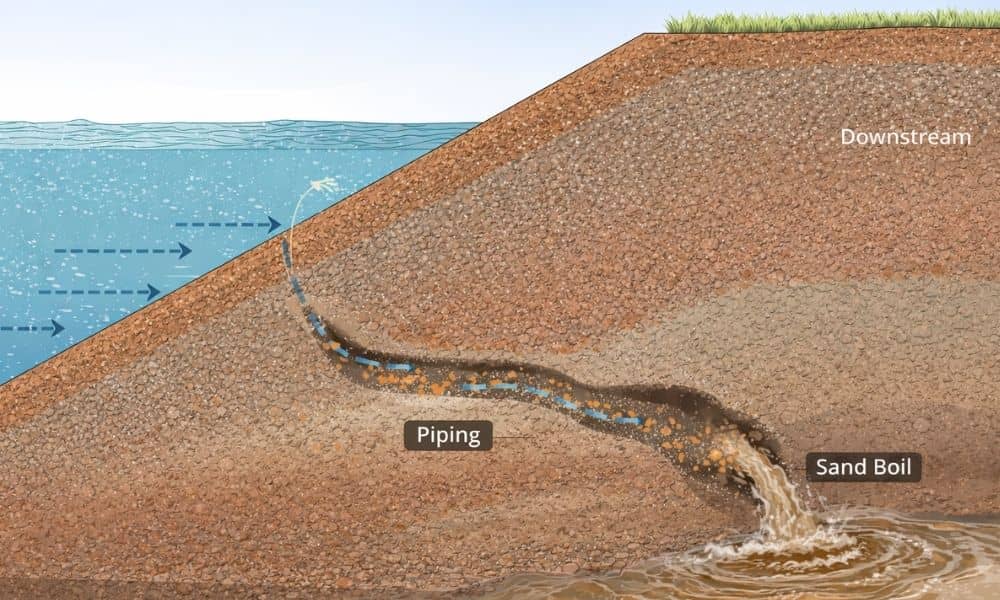
Illustration showing internal soil erosion inside an embankment dam where water seepage removes soil particles and forms piping channels

Internal erosion is the formation of voids within a soil caused by the removal of material by seepage. It is the second most common cause of failure in levees and one of the leading causes of failures in earth dams, responsible for about half of embankment dam failures.

Internal erosion occurs when the hydraulic forces exerted by water seeping through the pores and cracks of the material in the dam and/or foundation are sufficient to detach particles and transport them out of the dam structure. Internal erosion is especially dangerous because there may be no external evidence, or only subtle evidence, that it is taking place. Usually, a sand boil can be found, but the boil might be hidden under water. A dam may breach within a few hours after evidence of internal erosion becomes obvious.

Piping is a related phenomenon and is defined as the progressive development of internal erosion by seepage, appearing downstream as a hole discharging water. Piping is induced by regressive erosion of particles from downstream and along the upstream line towards an outside environment until a continuous pipe is formed. (Wikipedia)

Posted on March 6, 2026 by DentonCEMarch 5, 2026

Minimum Channel Grades: Why They Matter in Denton

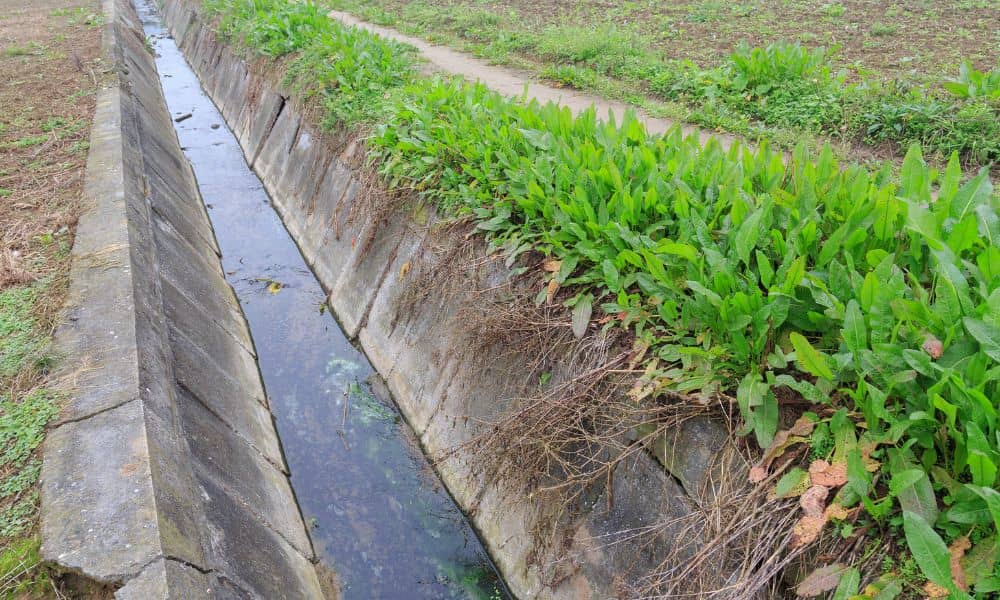
Concrete stormwater drainage channel in Denton showing proper minimum longitudinal slope for positive drainage

According to the City of Denton Development Code (Drainage Criteria Manual), open channels must be designed with minimum longitudinal slopes to prevent standing water, reduce sediment buildup, and maintain positive drainage flow. In practice, engineers must carefully balance slope, velocity, and erosion control to ensure channels convey stormwater efficiently without causing downstream scour.

Posted on March 3, 2026 by DentonCEFebruary 27, 2026

Post navigation

← Older posts
Newer posts →
© DentonCivilEngineering.com
9500 Ray White Rd Suite 200
Fort Worth, TX 76244
Phone: (940) 220-4727
...a David H Recht Engineering marketing website.

Web Development and SEO by:
N2Biz.co

Privacy Policy | Terms of Use

The owner of this website, USA Surveying & Engineering, LLC., provides coordination of professional land surveying and engineering services in all 50 states. The professional surveying and engineering services provided to you will be conducted by fully licensed professionals in your state.

Follow Us
&nbsp Privacy Policy
↑